30 August, 2026
Sunday
NEWS
Strategic Analysis of Corporate Insolvency and Asset Contagion: The Case of Stonewall Hotel Sydney and Pride Holdings Group
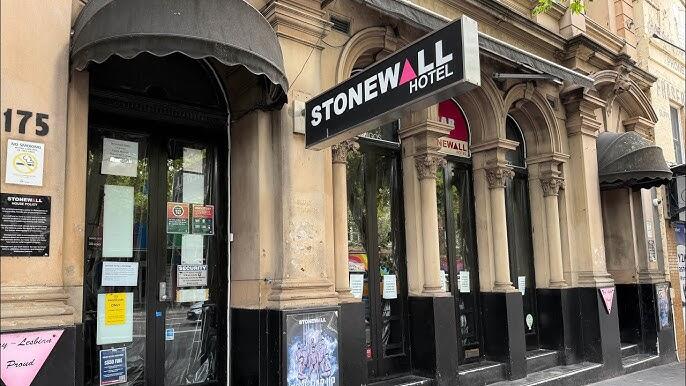
The voluntary administration of Stonewall Hotel Pty Ltd, the corporate entity governing the iconic Oxford Street venue in Darlinghurst, Sydney, serves as a significant case study in the risks associated with rapid, equity-leveraged consolidation in the global LGBTQ+ hospitality sector. On March 13, 2026, the appointment of Mohammad Najjar from Vanguard Insolvency Australia as administrator marked the formal transition of the business from a community-led institution to a distressed asset under the control of an insolvency practitioner. This development occurred less than a year after the venue’s acquisition by the United States-based Pride Holdings Group (PHSE), an organization that has aggressively expanded its portfolio through share-based transactions while operating under substantial financial distress, including a public "going concern" warning.
The Oxford Street Administration: Origins and Mechanisms
The insolvency of the Darlinghurst venue, which had operated continuously since 1997, was precipitated by a combination of physical infrastructure failures and an unsustainable corporate debt structure. In February 2026, the venue suffered a partial ceiling collapse during a "Pride Bingo" event, a failure attributed to a significant water leak. While the immediate repairs allowed for a brief resumption of trade, the incident underscored the aging nature of the facility and the potential lack of a dedicated capital expenditure reserve within the new parent company’s framework. By early March 2026, the venue had ceased operations entirely, citing "urgent maintenance," a common precursor to formal administration when a business can no longer meet its short-term obligations to staff, creditors, or landlords.
The administration process was triggered under Section 436A of the Corporations Act 2001 (Cth), indicating that the directors of Stonewall Hotel Pty Ltd—who include Michael Barrett and Craig Bell—determined the company was likely to become insolvent if trade continued. The formal notice was placed on the venue’s exterior and reported via social media platforms such as Instagram before ASIC confirmed the filing.
Chronology of the 2026 Administration and Physical Setbacks
| Date | Event Category | Description and Impact |
| February 17, 2026 | Infrastructure Failure |
A 1m x 1.5m section of the ceiling collapsed during a public bar event. |
| February 18, 2026 | Operational Response |
Venue briefly reopened after water leak repairs; Diva Bar used as overflow. |
| March 9, 2026 | Operational Cessation |
Darlinghurst venue closed for "much-needed repairs and maintenance". |
| March 13, 2026 | Legal Insolvency |
Mohammad Najjar (Vanguard Insolvency) appointed as Administrator at 1:43 pm. |
| March 16, 2026 | Public Notification |
ASIC automated alerts and physical notices confirm the administration. |
| March 25, 2026 | Statutory Meeting |
First meeting of creditors held via teleconference to consider committee appointments. |
Financial Analysis of Pride Holdings Group (PHSE)
The fundamental driver of the Sydney administration appears to be the systemic financial instability of its parent company, Pride Holdings Group. Formerly known as Parliament House Enterprises Inc., the company is listed on the lightly regulated OTC Markets under the symbol PHSE. As of late 2025, the group’s financial filings revealed a precarious position characterized by high accumulated deficits and critically low cash reserves.
The group reported an accumulated deficit of (approximately million) by September 30, 2025. For the first nine months of that year, it posted a net loss of ( million), with the third quarter alone accounting for () in losses. Perhaps most concerning was the rapid depletion of liquid capital; the company ended September 2025 with just () in cash, a sharp decrease from the () held at the conclusion of 2024.
This liquidity crisis was managed by the group through an aggressive "shares-for-equity" acquisition strategy. Rather than utilizing cash, Pride Holdings issued massive quantities of common stock to acquire venues. The Darlinghurst Stonewall acquisition was completed for million, represented by million shares priced at each. While this allowed the group to report a growing asset base on its balance sheet, it simultaneously diluted the ownership of existing shareholders and failed to provide the acquired venues with the necessary cash flow to manage operational emergencies or infrastructure maintenance.
Financial Status of Pride Holdings Group (Q3 2025)
| Metric | Value (USD) | Implication |
| Net Loss (9 months to Sep 30) |
Increasing operational costs vs. stagnant revenue. |
|
| Total Accumulated Deficit |
Multi-year erosion of capital base. |
|
| Cash on Hand (Sep 30) |
Insufficient to cover liabilities for a global portfolio. |
|
| Shares Outstanding (Sep 30) |
Extensive dilution following 2025 acquisitions. |
|
| Transaction Price (Stonewall) | per share |
Valuation benchmark for the Darlinghurst acquisition. |
The Stonewall Newtown Venture: Structure and Separation
A critical component of the user's inquiry concerns the status of the recently opened Stonewall Newtown venue at 157 King Street, formerly the site of Kuleto's cocktail bar. The expansion into the Inner West was designed as a "brother or sister" venue to the Oxford Street flagship, yet its legal and ownership structure differs significantly, ostensibly to protect the asset from the parent company's broader liabilities.
The freehold of the King Street premises was purchased for million on September 13, 2025, by 157 Kingstreet Pty Ltd, a company controlled by Greg Magree, a prominent publican and former director of the original Stonewall. Pride Holdings Group does not own the building but instead secured a 10-year lease for the site. The business operation itself is held under Stonewall Newtown Pty Ltd, a company registered on November 19, 2025. Although this entity is "associated" with the Pride Holdings Group through shared personnel—namely Craig Bell, who is a board member of Pride Holdings and the sole director of the Newtown entity—it is technically a separate legal vehicle.
This separation was emphasized by a consortium spokesperson who clarified that the Newtown venture is a separate entity to Pride Holdings Group. However, the operational reality is more complex. Pride Holdings CEO Michael Barrett has publicly commented on the Newtown venue as the third expansion of the LGBTQIA+ hospitality company into the Australia/Asia region, indicating that while the legal liability may be separated, the strategic and operational management remains centralized.
Ownership and Leasehold Breakdown of Stonewall Newtown
| Component | Controlling Entity | Key Personnel |
| Freehold Title (157 King St) | 157 Kingstreet Pty Ltd |
Greg Magree |
| Business Operator | Stonewall Newtown Pty Ltd |
Craig Bell (Director) |
| Leasehold Holder | Pride Holdings Group |
Michael Barrett (CEO) |
| Brand Licensor | Pride Holdings Group |
Michael Barrett (CEO) |
Global Portfolio and International Asset Valuation
The instability within the Sydney market must be contextualized against Pride Holdings' broader international portfolio, which encompasses assets in the United States, Indonesia, and Italy. These locations were acquired during the same 2025 expansion phase and are subject to the same "going concern" risks as the Sydney venues.
North American Operations: Key West and Florida
The group's most significant revenue-generating assets are located in Florida, particularly the Aquaplex complex in Key West. This complex includes Aqua Nightclub, Sidebar, 22&Co, and the Birdcage Cabaret. These venues are central to major tourism events like "Woof Week," "Tropical Heat," and "Fantasy Fest". The acquisition of the Aquaplex assets was valued at million in shares, representing the largest single transaction in the group’s history.
Additionally, the group owns the "Johnsons" brand, which operates all-male nude strip clubs in Tampa and Fort Lauderdale. These venues were acquired from Matt Colunga for million in shares. While these businesses remain operational as of March 2026, their continued viability is contingent on the group's ability to maintain the stock value of PHSE, as many of these deals included restrictions or expectations regarding share performance.
Southeast Asian and European Expansion
Pride Holdings entered the Asian market with the acquisition of a venue in Seminyak, Bali, rebranded as Stonewall Bali in October 2025. This share transaction was intended as a beachhead for a broader rollout into Asia and New Zealand. However, recent reports from February 2026 suggest that associated properties like the Laki Uma Villa (a men-only guesthouse) have entered temporary closure for renovation, a development that parallels the maintenance closures observed in Sydney before the onset of administration.
The group also acquired the Castello di Camino in Italy for million, a property purchased from the company’s own Chief Operating Officer, Timothy Majors, in exchange for a yet-to-be-determined number of shares. This acquisition has been used by the company to bolster its balance sheet valuation, with the group announcing a million asset valuation for the property on March 9, 2026. Critics and market analysts point to this "castle acquisition" as a potential example of asset inflation, given that the property offers zero operational synergy with the group’s core business of LGBTQ+ nightclubs and bars.
Summary of Major Global Assets (Pride Holdings Group)
| Asset Name | Location | Transaction Value | Operational Status (March 2026) |
| Aquaplex Complex | Key West, FL, USA | million |
Active (Participating in 2026 Pride). |
| Castello di Camino | Camino, Italy | million |
Held for valuation purposes. |
| Stonewall Hotel | Sydney (Darlinghurst) | million |
In Voluntary Administration. |
| Johnsons Tampa/Ft.L | Florida, USA | million |
Active; controversy over exclusion policies. |
| Stonewall Bali | Bali, Indonesia | million |
Uncertain; associated villas in "renovation". |
Causes of the Current Crisis and Operational Issues
The issues currently facing Stonewall Hotel and Pride Holdings Group can be categorized into three primary drivers: structural financial weakness, governance failures, and physical asset mismanagement.
Strategic Reliance on Volatile Equity
The primary cause of the administration is the group’s total reliance on its own stock as a currency for growth. When Pride Holdings acquired Stonewall Sydney, it did so by issuing 100 million shares priced at 6 cents. By November 2025, these shares were trading at 14 cents, providing a massive on-paper gain for the sellers, such as Fohson Investments and Fetch Financial. However, this "paper wealth" did not translate into operating capital for the venue itself. When the roof collapsed and the building required urgent repairs, the venue had no cash reserves, and the parent company’s $111,000 cash balance was insufficient to fund a major metropolitan renovation.
Governance and Related-Party Transactions
The group's board of directors includes several individuals who were formerly the owners of the venues acquired. Craig Bell, who received million shares in the Stonewall Sydney deal, moved from being an independent owner to a board member of the conglomerate. Similarly, Timothy Majors, the COO, sold his own Italian castle to the company he helps lead. These related-party transactions can create conflicts of interest, where the primary goal becomes maintaining the stock price to protect personal wealth rather than ensuring the operational health of the individual hospitality units.
Regulatory and Public Relations Friction
The group’s expansion of the "Johnsons" brand has also brought significant regulatory and social friction. Plans to convert the top floor of the Sydney Stonewall into a "Johnsons Sydney" strip club involved flying dancers from Tampa to Australia to "teach them the proper way to dance". This hyper-masculine, men-only format faced intense criticism in Chicago, where activists filed petitions against the club for body-shaming policies and the exclusion of women visitors. These controversies, combined with the "uncirculated" nature of the group's early press releases, suggest a lack of transparency and a potential misalignment with the community-focused values of the venues they acquired.
Future Outlook: Viability and Contagion Risks
The future of Pride Holdings Group is currently highly uncertain. The administration of the Darlinghurst Stonewall serves as a potential "canary in the coal mine" for the rest of the portfolio. If the administrator determines that the Sydney business cannot be salvaged through a Deed of Company Arrangement (DOCA), it will likely be liquidated, and the "Stonewall" brand on Oxford Street will permanently disappear after 28 years.
Potential Outcomes for Pride Holdings
The group's viability hinges on its ability to raise cash or liquidate a non-core asset like the Italian castle. Without a cash injection, the following risks are imminent:
-
Brand Contagion: The failure of the flagship Darlinghurst venue may lead to a loss of consumer and creditor confidence in the Newtown and Bali venues, even if they are held in separate legal entities.
-
Lender Recourse: If any of the group’s expansion was funded through debt rather than just shares, the Australian administration could trigger "cross-default" clauses in the US, allowing lenders to seize other assets.
-
Regulatory Action: The OTC Markets can move the company to "Caveat Emptor" or "Grey Market" status if financial disclosures are not improved, which would effectively destroy the value of the shares used in all recent acquisitions.
Impact on the Sydney LGBTQ+ Landscape
The closure of Stonewall on Oxford Street is a watershed moment for Sydney's queer geography. Following the rebranding of Arq to Aura, Stonewall was the last major "traditional" gay venue on the strip. The "party continuing" in Newtown may reflect the shifting demographic of the city, but it represents a loss of historical continuity for a community that has utilized the Darlinghurst venue for Mardi Gras, protests, and celebrations for three decades.
While Stonewall Newtown may survive in the short term due to its freehold being held by Greg Magree, the operational link to the distressed Pride Holdings Group means that its long-term future remains tied to a company that is currently fighting for its financial survival. The administration of Stonewall Hotel Pty Ltd is not just a localized failure of a single bar; it is a manifestation of the risks inherent in the globalization and financialization of LGBTQ+ community spaces.
Recent News